What Your ISP Sees That Your VPN Cannot Hide

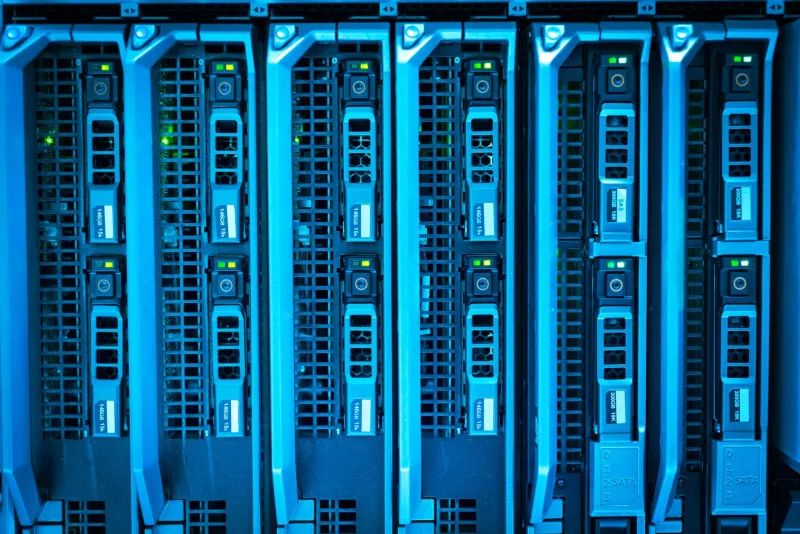
Photo: Stealth Communications, CC BY-SA 3.0, via Wikimedia Commons
The Architecture Problem Nobody Talks About
There is a persistent and understandable misconception at the heart of consumer privacy discussions in the United States: that a VPN or proxy service renders a user effectively invisible to all parties observing their internet activity. Privacy tools are genuinely valuable, and the protections they offer are real. But the network architecture through which all American internet traffic flows creates an unavoidable reality—your internet service provider sees your connection before any proxy server does.
When you subscribe to residential or business internet service through a provider such as Comcast, AT&T, Verizon, or Charter, that company becomes the literal gateway through which every packet of data you send or receive must travel. A proxy or VPN encrypts the content of those packets and substitutes a different destination address, but it cannot conceal the fundamental fact that a connection was made, when it was made, how long it lasted, and how much data was transferred. This metadata, as modest as it may sound, tells a detailed story.
What ISPs Are Legally Permitted to Collect and Retain
The legal framework governing ISP data collection in the United States is considerably more permissive than many users realize. In 2017, Congress voted to repeal Federal Communications Commission privacy rules that would have required ISPs to obtain explicit consumer consent before collecting and selling browsing data. That rollback fundamentally altered the landscape of ISP-level surveillance for American users.
Under current federal law, ISPs are permitted to collect a broad range of information about their subscribers, including:
- Connection timestamps and session durations: When you connected, how long you remained online, and when you disconnected.
- IP address assignments: The specific IP address assigned to your account at any given moment, which can be cross-referenced with external logs.
- Data volume and traffic patterns: The quantity of data transferred, which can indicate streaming activity, file transfers, or other bandwidth-intensive behavior.
- DNS query logs: In cases where users rely on their ISP's default DNS resolver, the provider may log every domain name requested—even if the content of the response is encrypted.
- Destination IP addresses: Even when using a VPN or proxy, the ISP can observe that traffic is flowing to a specific server address. If that address is a known proxy endpoint, the ISP knows you are using one.
Several major ISPs have published privacy policies explicitly acknowledging that they may share this information with affiliated advertising networks, third-party data brokers, and—under lawful process—government agencies.
The DNS Blind Spot
One of the most significant and least-discussed vulnerabilities in proxy and VPN usage involves DNS resolution. When you type a web address into your browser, your device must first query a DNS server to translate that human-readable address into a numeric IP address. If your VPN client is not configured to route DNS queries through the encrypted tunnel—or if the DNS resolver you are using belongs to your ISP—those queries are transmitted in plaintext before your encrypted connection is even established.
The practical consequence is that your ISP may maintain a log of every domain name you attempted to visit, regardless of whether you were connected to a proxy or VPN at the time. This is not a theoretical vulnerability; it is a configuration failure that affects a substantial number of users who believe themselves to be fully protected.
Services that take DNS privacy seriously route all resolver queries through the encrypted tunnel and use privacy-respecting resolvers that do not log user activity. Verifying that your chosen tool handles DNS correctly is not optional if ISP-level surveillance is among your primary concerns.
Traffic Analysis Without Content
Even setting aside DNS queries, ISPs possess sophisticated analytical capabilities that allow them to draw meaningful inferences from metadata alone. Researchers at universities and government institutions have repeatedly demonstrated that traffic analysis—examining the timing, volume, and frequency of encrypted data flows—can reveal a surprising amount about user behavior without ever decrypting a single packet.
A user who generates a burst of high-volume traffic every evening between 8 p.m. and 11 p.m. is likely streaming video. A user whose traffic patterns show frequent small exchanges with a consistent set of IP addresses may be engaged in messaging or social media. These behavioral signatures persist even when the content of communications is entirely encrypted, and they are visible to any network operator with access to the connection layer—including your ISP.
What Proxy and VPN Services Actually Protect
None of the above should be interpreted as a dismissal of the genuine protections that proxy and VPN services provide. The distinction worth drawing carefully is between what these tools protect against and what they do not.
A well-configured proxy or VPN effectively:
- Conceals browsing content from your ISP. The specific pages you visit, the data you submit in forms, and the content of your communications are encrypted and inaccessible to your provider.
- Masks your IP address from destination websites. Sites you visit see the proxy server's address rather than your own, limiting their ability to track you across sessions.
- Protects against network-level eavesdropping. On public Wi-Fi networks, where unencrypted traffic is trivially interceptable, a VPN or proxy provides essential protection against passive surveillance by third parties on the same network.
- Reduces exposure to targeted advertising based on browsing content. Without visibility into the specific sites you visit, ISPs and their advertising partners cannot build detailed interest-based profiles from your browsing history.
What these tools do not accomplish is making your connection invisible to your ISP at the metadata level. The provider still knows that you are online, still knows that you are routing traffic through a proxy, and still retains the connection records that are required under applicable data retention policies.
Forming Realistic Expectations
For American users navigating the current privacy landscape, the appropriate response to ISP-level data collection is not to abandon privacy tools but to understand their specific function within a layered privacy strategy.
A proxy or VPN is most accurately understood as a tool that shifts the trust relationship—moving the party with access to your traffic from your ISP to the proxy provider. This is meaningful if the proxy provider operates under a strict no-logging policy, is subject to favorable legal jurisdiction, and has undergone independent audits confirming its data practices. It does not eliminate the existence of a trusted intermediary; it replaces one with another that you have deliberately chosen.
For users with heightened privacy requirements, this substitution matters considerably. An ISP is a commercial entity with advertising relationships and legal obligations to comply with domestic law enforcement requests. A privacy-focused proxy service operating under a no-log policy and subject to rigorous independent verification presents a materially different risk profile.
The Practical Takeaway
Understanding the boundary between what your privacy tools protect and what remains visible at the network infrastructure level is not cause for alarm—it is the foundation of informed decision-making. Your ISP will always occupy a position in your network architecture that proxy services cannot fully displace. What you can control is the degree to which that position translates into actionable knowledge about your behavior.
Choosing a proxy or VPN service that handles DNS correctly, maintains verified no-log policies, and encrypts all traffic through the tunnel addresses the most significant vulnerabilities. Combining that choice with awareness of what ISPs are legally permitted to collect ensures that your expectations align with the protections you are actually receiving. In a regulatory environment as permissive as the current American framework, that alignment is not a luxury—it is a necessity.