More Hops, More Problems: How Stacking Proxies Can Betray Your Identity
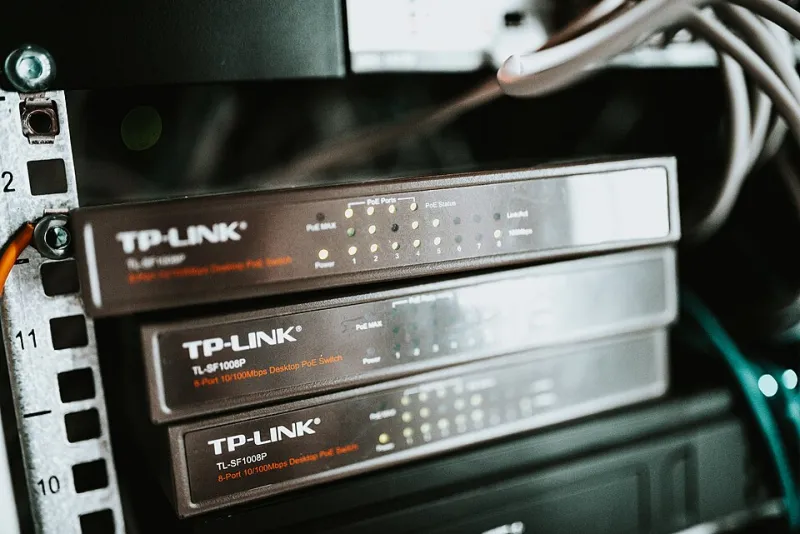
Photo: Shixart1985, CC BY 2.0, via Wikimedia Commons
There is an intuitive appeal to the idea that more layers of anonymity produce stronger privacy. If one proxy server obscures your IP address, then two should obscure it twice as effectively—and three should make you nearly untraceable. This logic feels sound, and it is the reasoning behind multi-hop VPN configurations, proxy chains, and services that route traffic through three or more relay nodes before it reaches its destination.
The logic, however, is incomplete. In practice, the same complexity that seems to multiply your protection can generate a set of technical characteristics so distinctive that advanced tracking systems identify you more reliably than they would if you had connected through a single, well-configured server. This is not a theoretical concern. It is a measurable phenomenon that privacy researchers and security professionals have documented repeatedly, and it has direct implications for anyone in the United States using stacked proxy configurations to protect sensitive browsing activity.
What a Proxy Chain Actually Looks Like to the Network
When you connect through a single proxy, the destination server sees one IP address—the proxy's—and a relatively standard set of connection parameters. The traffic profile is clean. There is little to distinguish your session from the thousands of other users routing through the same server.
When you stack proxies, each additional hop introduces measurable latency. The cumulative delay is not random. It reflects the geographic distance between relay nodes, the processing overhead at each server, and the specific routing protocols in use. A three-hop chain passing through servers in New York, Amsterdam, and Singapore produces a latency signature that is both consistent across your sessions and highly unusual compared to normal internet traffic. Sophisticated traffic analysis systems, including those operated by large advertising networks, government agencies, and enterprise fraud detection platforms, are specifically calibrated to detect these anomalies.
In short, your chain of proxies does not blend you into the crowd. It marks you as someone running a chain of proxies—and that designation itself becomes an identifier.
The Timing Attack Problem
Latency anomalies are only one dimension of the problem. Timing correlation attacks represent a more targeted threat for users who rely on multi-hop configurations. In this class of analysis, an adversary monitors traffic entering the first node of your chain and traffic exiting the last node. Even without decrypting a single packet, statistical correlation of packet timing, size, and frequency allows the adversary to match the two streams with high confidence.
This technique is well-established in academic literature and has been demonstrated against Tor, one of the most extensively engineered anonymity networks in existence. The multi-hop architecture that Tor uses was designed with timing correlation in mind, and it still remains vulnerable under certain conditions. A commercially assembled proxy chain, assembled without the same engineering rigor, offers considerably less resistance.
For the average American user who has stacked two or three commercial VPN or proxy services in the belief that no single provider can be compelled to surrender logs, the timing attack concern is particularly relevant. The protection model assumes that no adversary can observe both ends of the chain simultaneously. That assumption holds less reliably than most users realize.
Protocol Inconsistencies as Fingerprinting Vectors
Beyond latency and timing, multi-hop configurations introduce protocol-level inconsistencies that fingerprinting systems can exploit. Each relay node in a proxy chain typically runs different software, applies different encryption parameters, and handles header modification differently. The result is a traffic profile that contains internal contradictions—characteristics that would not appear in legitimate, single-origin connections.
For example, certain HTTP header fields may be added or modified by one relay and then modified again by the next. The sequence of transformations leaves a residue that traffic analysis tools can detect. Similarly, the cipher suites negotiated at different points in the chain may not match what a standard browser connecting directly would present. These mismatches are subtle, but they are consistent across sessions, which makes them reliable fingerprinting vectors.
Website operators and content delivery networks that employ advanced bot detection—a category that now includes most major US financial institutions, streaming platforms, and e-commerce sites—routinely screen for exactly these kinds of protocol inconsistencies. A user connecting through a well-configured single proxy may pass these checks without incident. A user connecting through a self-assembled three-hop chain may trigger anomaly flags on the very first request.
The Rarity Problem
Perhaps the most counterintuitive aspect of proxy stacking is what might be called the rarity problem. Anonymity, in a technical sense, depends on being indistinguishable from a large population of other users. The more unusual your configuration, the smaller that population becomes.
Most internet users connect through standard residential or commercial connections. A meaningful but still relatively small percentage use a single VPN or proxy. A much smaller fraction use double-hop configurations. The number of people running three or more hops in a specific geographic sequence, using specific protocols, at specific times of day, is vanishingly small. That rarity does not make you invisible. It makes you conspicuous in a way that a single-proxy user is not.
Privacy researchers sometimes describe this as the uniqueness paradox: the more elaborate your anonymity configuration, the more uniquely identifiable your traffic pattern becomes to any system sophisticated enough to analyze it. This is not an argument against using privacy tools. It is an argument for understanding what those tools actually accomplish and calibrating your approach accordingly.
Practical Implications for Privacy-Conscious Users
None of this means that proxy chains or multi-hop VPN configurations are without value. For certain threat models—particularly those involving adversaries who can only observe one end of the connection—additional hops do provide meaningful protection. The question is whether the threat model justifies the tradeoffs.
For the majority of American users whose primary concerns are commercial surveillance, behavioral advertising, and ISP data collection, a well-configured single proxy or VPN service from a reputable provider will typically deliver stronger practical privacy than a self-assembled chain. A clean, consistent traffic profile that blends with a large user population is more difficult for commercial tracking systems to individualize than a complex, unusual profile that stands apart from nearly all other traffic on the network.
For users operating under more serious threat models, the calculus is different, but the lesson is the same: complexity is not automatically equivalent to security. The architecture of your privacy configuration should reflect a clear-eyed assessment of who your adversaries are, what data they can observe, and what analytical capabilities they possess.
Building Privacy That Actually Works
Effective digital privacy is less about accumulating layers and more about eliminating the characteristics that make your traffic distinctive. That means selecting a proxy or VPN provider whose infrastructure carries enough traffic to provide genuine crowd cover. It means ensuring that your browser and device configurations do not introduce fingerprinting vectors that persist regardless of how many relay nodes you add. And it means recognizing that the goal is not to construct the most elaborate possible anonymity architecture, but to present a traffic profile that offers no reliable basis for individualization.
At TG Proxy, the underlying principle is straightforward: privacy tools should reduce your visibility, not inadvertently amplify it. Understanding the technical dynamics of proxy stacking is a necessary step toward configurations that deliver on that promise rather than merely feeling like they do.